
-
AGRICULTURAL MACHINERY
- BRANDS
- Grain-harvesting combines
- Tractors CASE IH
- Tractors ZOOMLION
-
Sowing machinery
- KUHN Planter 3 Select precision seed drill
- Sowing complex KUHN ESPRO _ RC
- Precision seeder KUHN KOSMA
- Case IH SDX 30/40 pneumatic sowing machine
- BEDNAR OMEGA OO FL sowing machine
- A wide seed drill BEDNAR EFECTA CE
- Grain seeder BEDNAR CORSA CN
- Pneumatic precision seed drill KUHN MAXIMA 3 TRM E
- BEDNAR MATADOR MO sowing machine
- Rear-Mounted hunter for fertilizer application BEDNAR FERTI-BOX FB
- Seeder BEDNAR DIRECTO
- Sprayers
- Tillage machinery
-
Harvesting machinery
- Olimac Drago 2 corn harvester
- Olimac Drago GT corn harvester
- Olimac Gold sunflower harvester
- Franco Fabril SF sunflower harvester
- Case IH 3020 TeraFlex
- Case IH Grain harvesters
- Case IH 3050 Varicut
- MacDon FD2 corn harvesters
- Grain reaper Case IH 2030
- Case IH 4408 corn harvester
- Case IH 4412 corn harvester
- PW8 Pick-up Header
- Corn harvester FRANCO FABRIL MH870
- Mower
- Balers
- Rollers
- Telescopic loader
- USED Machinery
- SAFEGUARD WARRANTY
-
PRECISION AGRICULTURE
- AgroDrones & UAV
-
Tractor solutions
- Raven CR7 Field Computer
- XCN - 2050 display
- Дисплей XCN-1050
- XCN-750 display
- Autopilot Electric Motor Drive automatic driving system
- Automatic driving system EZ-Pilot Pro
- AFS AccuGuide precision farming system
- Automatic water system T-Line
- Raven hydraulic autopilot for unprepared equipment
- Trimble Autopilot automatic control system
-
Sprayer solutions
- Raven RS1 ven autopilot for prepared equipment
- HAWKEYE 2 drop ejection and quality control system
- Automatic height control of the AutoBoom XRT sprayer
- Sidekick Pro direct injection system
- VSN visual driving camera
- Hawkeye HD sprayer nozzle control system
- AI-system spot spraying Carbon Bee Smart Sticker X
- Combine solutions
- Trailed implements solutions
- Correction service
- Maintenance of data
- USED MACHINERY
- SERVICE
- PARTS
- WORK AT TITAN
- SPECIAL OFFERS

Service Expert Team: expertise we pass on
08/10/2026
On a hot July day, a service engineer from the Service Expert Team was returning from a business trip when he received a call from the service coordinator. It turned out that a young specialist was working nearby on a service call. He had arrived to fix a simple malfunction but encountered a complex diagnostic issue and needed the assistance of an experienced colleague.
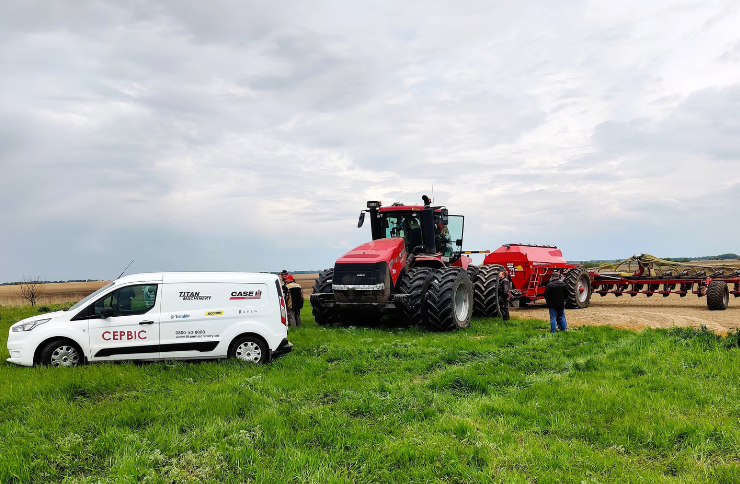
Half an hour later, the two specialists were already standing together in the field next to a powerful “patient.”
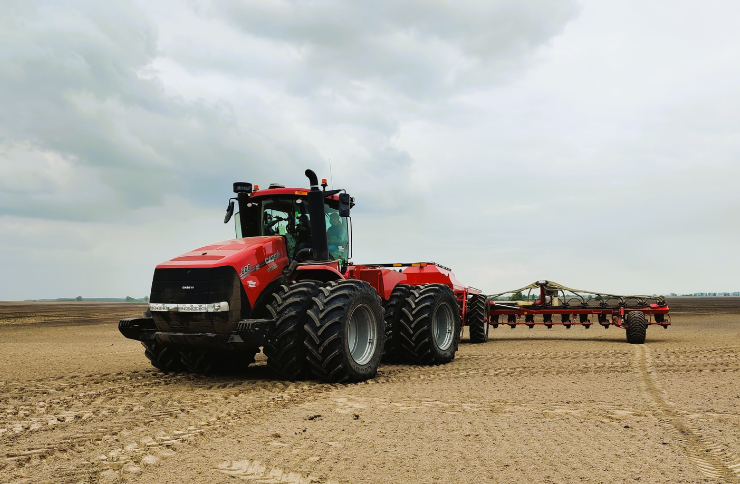
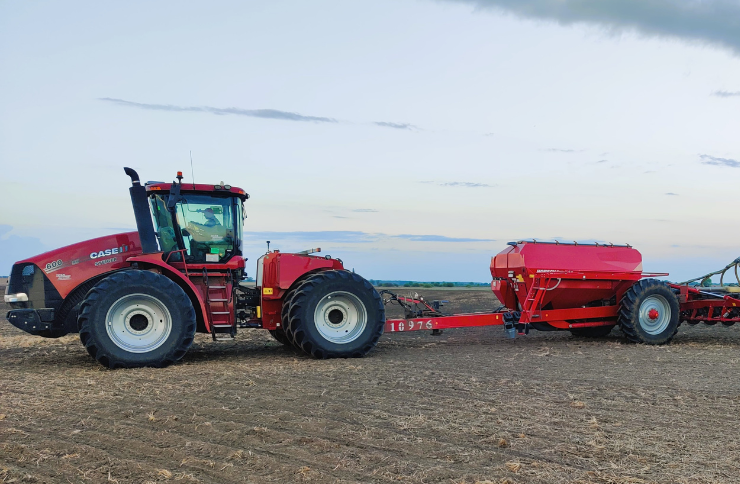
CASE IH Steiger 600 — this machine was well known to our experienced service engineer, as in winter he had carried out an engine repair on this very tractor. The machine has been reliably operating on the farm since 2015 and already has more than 15,000 operating hours of “technical experience.”
This time, the problem was a loss of tractor traction.
The junior service engineer had already checked the fuel and air filters, as well as the air system — there were no obvious causes of the malfunction. An Engine Fault error was displayed on the dashboard, but it was impossible to read it without diagnostic equipment: after a long search for the fault, the diagnostic laptop had run out of battery.
So the first task was simple — to restore the ability to perform full diagnostics. After connecting to the system, the service engineers began analyzing the errors and current engine operating parameters together.
At first glance, everything looked normal. But one of the indicators caught the experienced engineer’s attention — the camshaft speed. The reading was unstable: the data would appear and then disappear. This became an important clue.
The camshaft rotates twice as slowly as the crankshaft, so an unstable signal could indicate a problem in the camshaft speed monitoring system. The next step was to check the sensor. According to the repair documentation, its resistance should be approximately 900 ohms. The measurement confirmed that the sensor was functioning properly.
They then proceeded to check the electrical circuit. Based on the wiring diagram, the relevant wires and connection points were identified. And it was here that the first fault was discovered: the contacts in the control unit connector were oxidized. The connector was cleaned, the insulation and seals were checked, it was dried and reassembled according to the manufacturer’s recommendations.
Finally, the cause had been found and the malfunction was eliminated!
The tractor went back to the field. The first few passes with the subsoiler confirmed the positive result: traction had returned, and the machine was operating steadily. But during a turn, the tractor was strongly shaken — and the system went into emergency mode again. Sometimes two faults occur at the same time, which always complicates the diagnostic process.
The diagnostics were repeated directly while the tractor was moving. Under the watchful eye of the experienced colleague, the young service engineer began checking the wiring while simultaneously monitoring the parameters in real time. And then the camshaft speed parameter changed again…
It was enough to move the connector near the sensor itself. This is how the second and main cause of the malfunction was found. It turned out that, in addition to the oxidation of the contacts in the control unit connector, the camshaft speed sensor connector itself was also failing to provide reliable contact. The connector was replaced with a new one. After that, the tractor returned to the field once again — and this time it operated steadily, without errors or loss of traction.
This story is not only about consistent and high-quality diagnostics. It is about many years of experience that helps to see what is not always obvious at first glance, about knowledge that is so important to pass on to younger colleagues, and about a team in which an experienced specialist is always ready to help a newcomer. After all, a strong service team is not simply a group of professionals. It is a team in which the professional experience of one helps others develop and solve the most challenging tasks to keep our Customers’ equipment working.
For professional service support, contact us at our hotline at 0 800 50 80 80 or submit a request on the website.